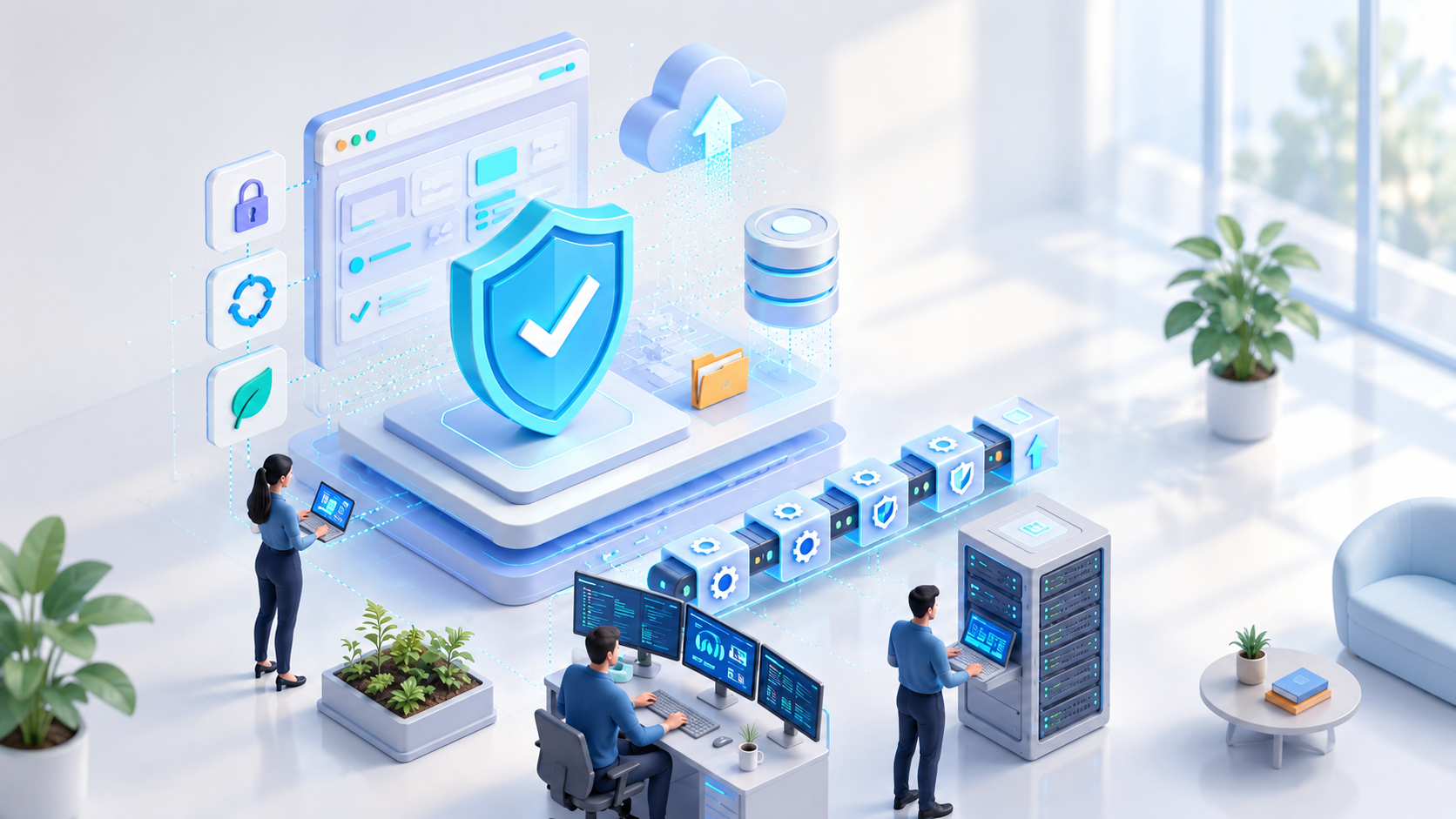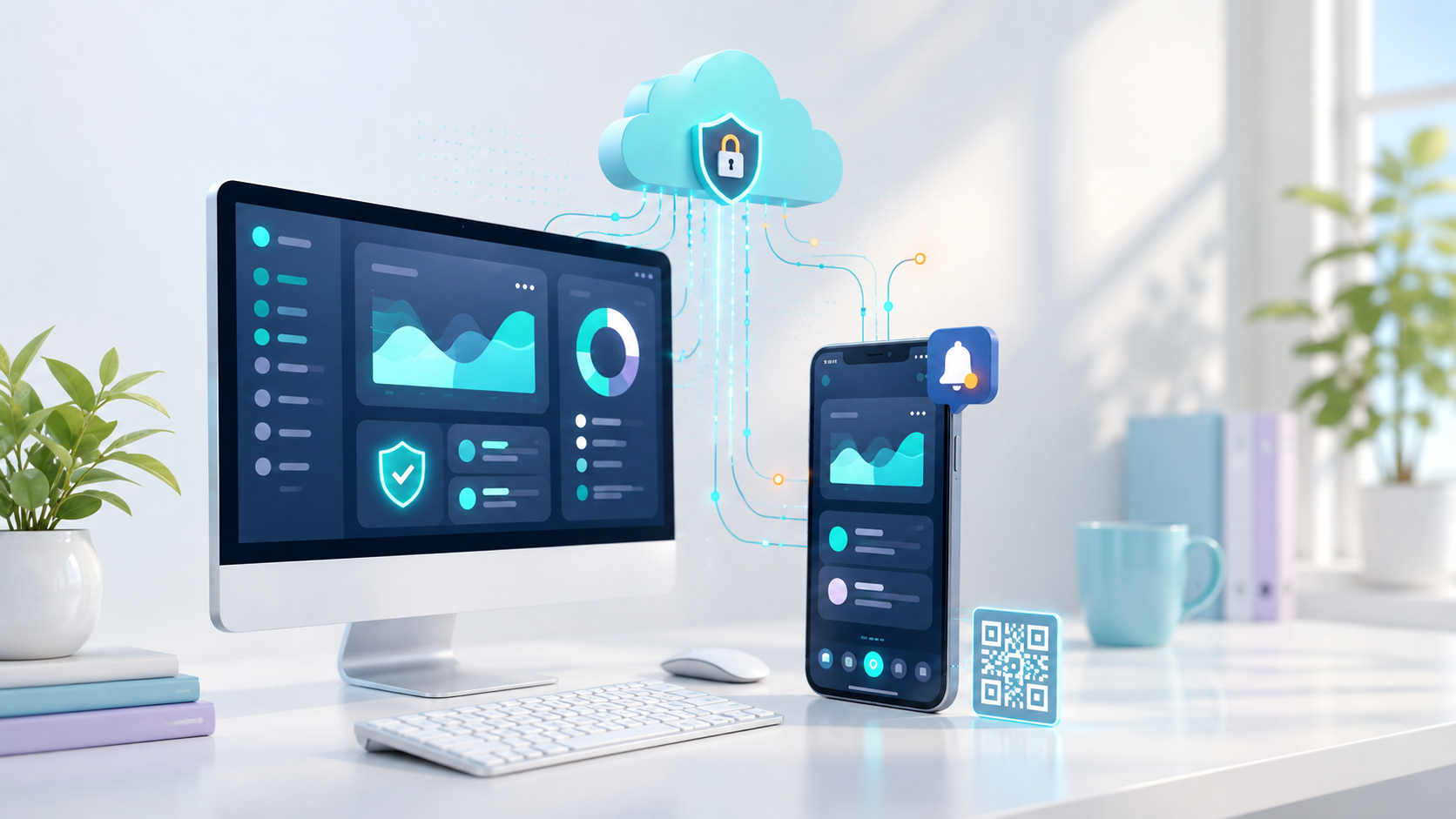
Even businesses in the same industry rarely manage order-taking, production, approvals, inventory, finance, and reporting in exactly the same way. Business rules, role assignments, and customer expectations that build up over the years differ from one organization to the next. Custom enterprise software is the approach of designing software around how a business actually works, rather than forcing that business into a standard template.
Off-the-shelf software vs. custom software
Ready-made packages offer a fast, affordable starting point for common needs. But as a business grows, the gap between what the package allows and what daily operations actually require can widen. If employees start entering the same data into multiple screens, patching things together with spreadsheets, or collecting approvals outside the system, that's a sign the existing software no longer covers the full process.
With custom software, the analysis starts from the business's actual workflow. User roles, permissions, exceptions, reports, and connections to other systems are considered together. The result isn't just a set of screens — it's a sustainable foundation that carries the organization's day-to-day operations.
When is custom software the right call?
- When industry- or company-specific business rules aren't supported by off-the-shelf packages,
- When the same data has to be entered repeatedly across multiple applications,
- When traceability, role-based permissions, or specialized reporting are critical,
- When existing systems need to be connected through APIs,
- When the company's growth plans exceed what standard software can support.
How does the right project start?
The first step in a successful custom software project isn't writing code — it's analyzing the process. What problem is being solved, how success will be measured, and what the first version should cover all need to be defined clearly. Breaking the project into phases, gathering early feedback from employees, and focusing on measurable gains all reduce investment risk.
Oksijen Yazılım studies an organization's existing operations and builds custom solutions that bring web, mobile, and integration components together under a single architecture. The goal isn't to move existing complexity into a digital form — it's to build a system that simplifies the process, can be measured, and adapts as the business grows.
Frequently Asked Questions
Does every business need custom software?
No. Businesses with standard processes may be well served by off-the-shelf packages. Custom software becomes worthwhile once specific business rules, integration needs, or scaling requirements become clear.
Can custom software be extended later?
When built on a modular, well-documented architecture, new modules, users, and integrations can be added to the system incrementally.