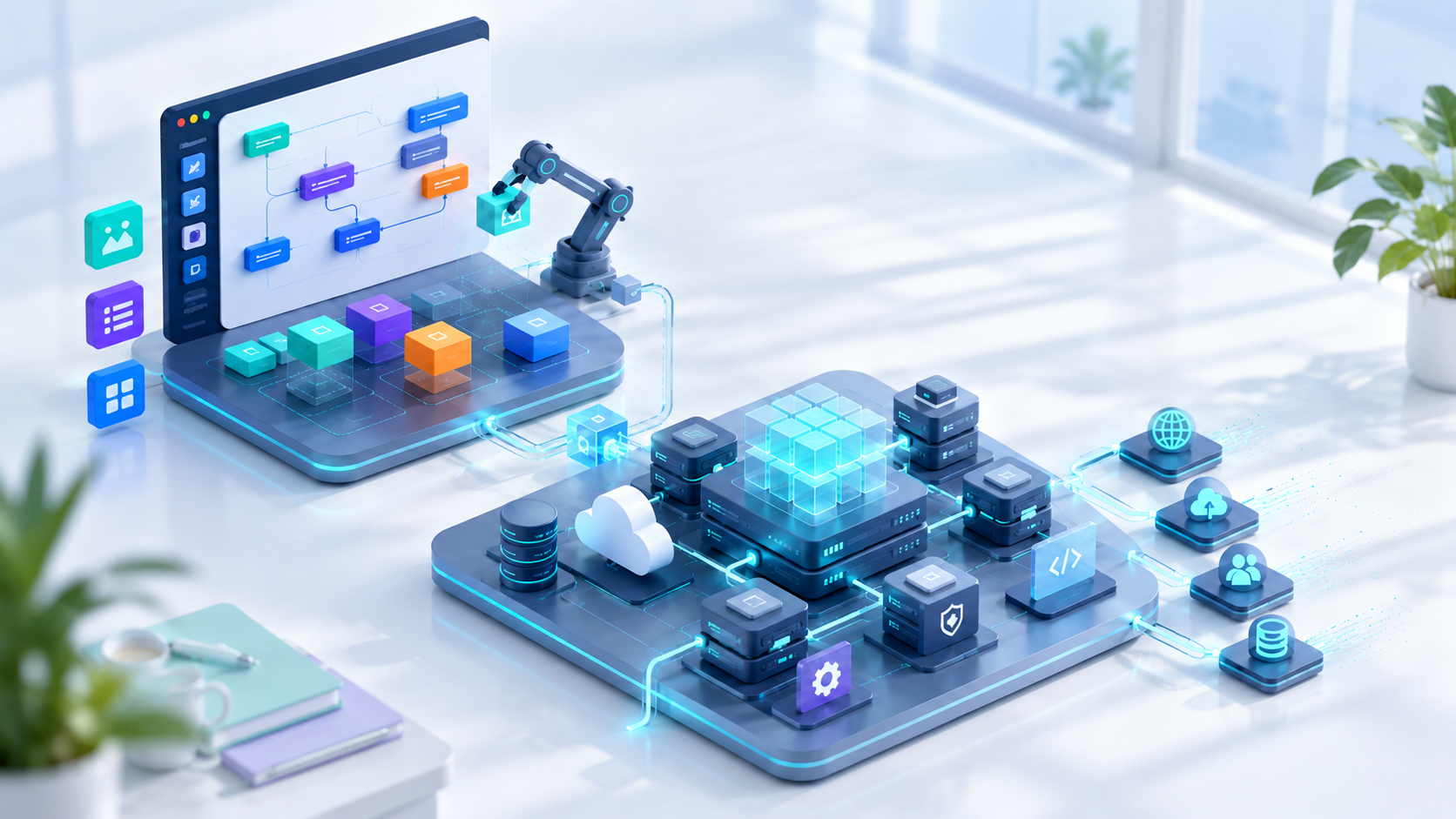
Cloud services offer fast setup and flexible capacity, while on-premise systems provide physical control and predictability for certain workloads. Neither approach should be labeled as absolutely good or bad. The decision should be based on the technical and business requirements of the specific application.
When is cloud the better choice?
If you have variable traffic, need to spin up new environments quickly, require access from multiple locations, or need managed services like databases, cloud is a strong option. Cost is usage-based instead of requiring upfront hardware investment. But if resources are scaled without control, monthly spend can end up higher than expected.
When does on-premise infrastructure make sense?
Very low-latency connections to local devices, steady and heavy workloads, or specific data-residency requirements can make on-premise infrastructure the better fit. In exchange, hardware refresh cycles, power, physical security, backups, and skilled staff all become the organization's responsibility.
Hybrid architecture
Services close to the production line can run locally, while central reporting or backups stay in the cloud. A hybrid setup adds flexibility, but if networking, identity, monitoring, and data synchronization aren't well designed, it ends up carrying the complexity of both environments at once.
Decision criteria
- How sensitive the data is and any data-residency requirements,
- Acceptable downtime and data-loss windows,
- Whether the workload is steady or variable,
- The organization's systems-management capability,
- Total cost of ownership over three to five years,
- Dependency on an external provider and an exit plan.
A good architecture doesn't just need to work today — it needs to hold up under failure, growth, and a possible change of provider. Where backups live, how the system would move to another environment, and how cost will be tracked should all be defined at the start of the project.
Frequently Asked Questions
Is the cloud always cheaper?
No. It can be advantageous for variable, growing workloads, but can end up more expensive with steady high usage or poor resource management.
Is a hybrid architecture more secure?
When designed well, it places data and workloads in the right environment, but the added integration and management complexity can also introduce new risks.